"We're bringing it back"
Family Well-being
Adrianna Bonnell's Work as an Early Years Visitor
In Membertou First Nation, Nova Scotia, Adrianna Bonnell has spent years working alongside children and families.
Before becoming an Early Years Visitor, she worked in early childhood education for nearly 14 years. She taught in daycares, studied child and youth care, earned a behavioural interventions diploma and later taught Mi’kmaq Early Childhood Education at Nova Scotia Community College.
But even with years of experience in classrooms and education spaces, there was one thing that she kept hearing from parents that stayed with her.
“Did my child learn anything today?”
Parents would ask why their children spent so much time playing.
“They’d say, ‘My child only played with playdough today’ or ‘They only did puzzles or blocks.’ And I was constantly explaining that children learn through play,” Adrianna shared. “Children learn through touching, seeing, feeling, hearing, moving. That is learning.”
Over time, those conversations pushed her to think differently about how families learn too. When the opportunity came up to become a home visitor in her community, something clicked.
“This was my chance to get into the homes and really sit with families and explain why these things matter,” she said. “I could sit on the floor with parents and children together and show them what children are learning through those activities.”
It was about creating safe, welcoming spaces where families felt comfortable enough to ask questions, share their experiences and build confidence in themselves.
Learning happens through relationship
As an Early Years Visitor, Adrianna worked with families from the prenatal stage until children reached four years old.
Some visits focused on child development and play-based learning. Others focused on emotional support, breastfeeding, language, culture, or simply listening.
Every visit looked different.
“You have to read the room,” she explained. “Sometimes you walk into a home and you know right away that this isn’t a toolbox card visit. This is a listening visit. Maybe a mom had a hard day. Maybe someone just needs support. You meet families where they are.”
That flexibility became one of the things she valued most about the role.
Rather than creating pressure or judgement, Adrianna focused on making families feel seen and comfortable. “I’ve always wanted visits to feel warm and welcoming,” she said. “I wanted families to feel like I was someone they could rely on.” That approach helped families feel more confident asking questions they may not have felt comfortable asking otherwise.
One visit she remembers clearly was with a mother who had many questions about breastfeeding. Instead of approaching the visit like a lesson or presentation, Adrianna shared her own lived experience as a mother. As a parent of five children herself, she often found ways to connect through personal stories.
“At the end of the visit, she told me, ‘This didn’t feel intimidating. It just felt like my friend was visiting me.’” Adrianna said.
By the end of the conversation, the mother had learned about milk storage, pumping, breastfeeding safety, and feeding routines without feeling overwhelmed.
“She didn’t even realize how much information we covered because the environment felt safe,” Adrianna said.
That feeling of safety is something Adrianna believes is essential to home visiting. “When people feel safe, that’s when learning happens.”
More than one child in the home
For Adrianna, visits were never only about the child enrolled in the program. When she visited homes where older siblings were present, she made sure they felt included too.
“If I brought playdough for one child, I brought enough for everybody,” she laughed.
During one visit, she taught children how to make farm animals out of playdough while introducing Mi’kmaq words for each animal.
“We sang songs together, used language together, and learned while playing,” she said.
What stayed with her most from that visit was the moment with one of the older children.
“He gave me a hug and said, ‘you’re my best friend.’”
Later that day, the family shared a post on social media thanking Adrianna for helping their child feel comfortable enough to sing and participate. “That really stayed with me,” she said. “It reminded me why these visits matter.”
For Adrianna, moments like those show how important relationship-building is in home visiting work. “You’re not just showing up with activities. You’re building trust with the whole family.”
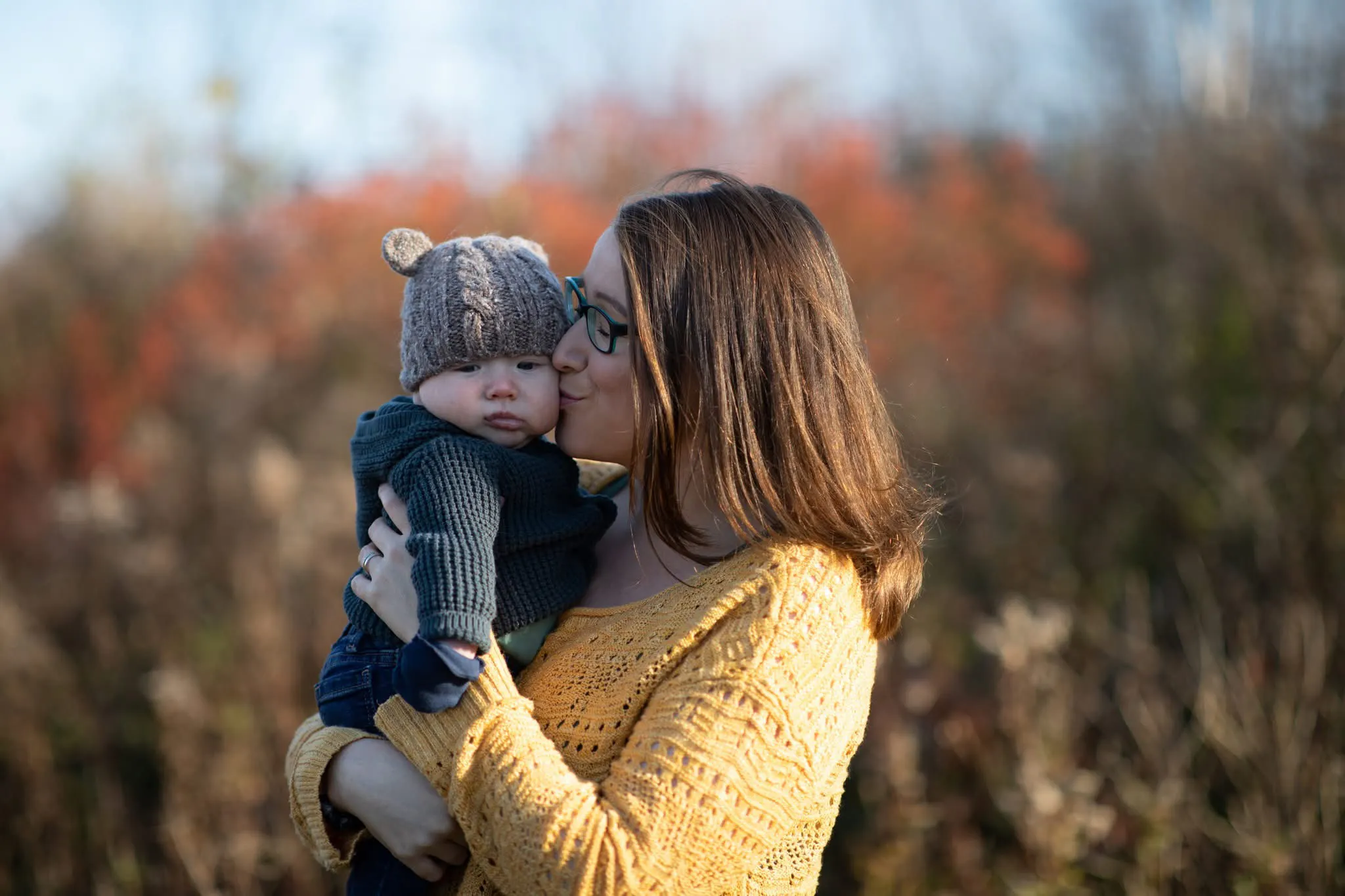
The power of being heard
Some of the most impactful moments Adrianna experienced as a visitor came from simply giving parents space to talk.
One mother shared with Adrianna that after the birth of her previous children, no one had ever asked her about her birth experience or how she was feeling emotionally. Through the home visits, she finally had space to reflect on difficult experiences she had been carrying for years.
“She told me she didn’t realize how healing it was just to talk about things,” Adrianna recalled.
That reflection was an important reminder of how much emotional support can shape a family’s experience.
“It’s not about being a therapist,” Adrianna explained. “It’s about creating a space where people feel seen, validated, and supported.”
Over time, the mother began connecting more with others in the community through gatherings and program activities.
“She told me she finally felt welcomed,” Adrianna said. “People were inviting her over at community events and she felt like she belonged.”
For Adrianna, that sense of belonging is one of the biggest goals of the work.
“This program helps connect families not just to resources, but to community and to each other.”
Bringing ceremony back
While Adrianna values the development and educational side of home visiting, one of the things she feels most proud of is helping reconnect families with culture.
Growing up, she remembers realizing that many cultural teachings and ceremonies were no longer really talked about.
“When I was studying early childhood education, I wanted to learn more about Mi’kmaq ceremonies connected to children and families,” she said. “But even my grandparents told me they didn’t know much because they weren’t allowed to practice those things growing up.” That realization stayed with her.
Eventually, she began learning from Knowledge Keepers and community members about welcoming baby ceremonies, naming ceremonies, and walking out ceremonies. Now, through her work, she helps bring those teachings back into community spaces.
“We recently held walking out ceremonies in our community again,” she said. “When we called to book the space, they told us they hadn’t seen one in about 40 years.”
“We said, ‘We’re bringing it back.’”
For Adrianna, that work is deeply personal.
“This role brought me back to myself,” she said. “It helped me reconnect me to my culture and helped me become the most authentic version of myself.”
She believes those cultural connections are especially important right now as communities work to reclaim language and teachings for future generations.
“There are fewer and fewer fluent speakers left in our community, this is the time to reclaim who we are.”
Through gatherings, songs, language activities, and cultural teachings, Adrianna says she now gets to watch families pass those teachings down to their children in real time.
“That’s my reward. Seeing families proud of who they are and hearing children use the language. That’s everything.”
A role built on trust
Today, Adrianna now supports and trains Early Years Visitors across Nova Scotia. Even though her role has changed, she still carries the lessons she learned from working directly with the families. She hopes more people come to understand the patience and relationship-building that goes into home visiting.
“We are people too. We’re trying our best to support families in a safe and respectful way.”
She knows that inviting someone into your home can feel vulnerable, especially for families navigating the impacts of intergenerational trauma or difficult past experiences. That’s why building trust remains at the center of the work.
“All it takes is one person to believe in somebody, Visitors can be that person.”
For Adrianna, the work has never been about checking boxes or delivering information, it’s about relationships. It’s about helping families feel confident. It’s about creating spaces where children feel safe. And it’s about supporting the next generation to grow up connected to their culture, language, and community..
“This work matters. And I really believe it’s happening at the right time, for the right reasons.”

Collaborate with MFI
We invite all Indigenous-led organizations to connect with us. We are excited to learn more about the well-being outcomes you wish to advance for the people in your local school, community, or organization.
Support the Mission
Join MFI in creating new pathways with Indigenous Peoples that lead to a more just system by funding the critical efforts to get there.